


Your dog has been diagnosed with a heart murmur.
Breaking down the diagnosis: What you need to know.
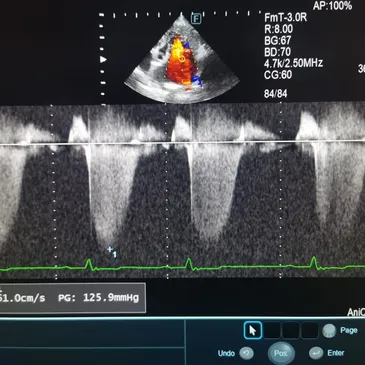
Myxomatous Mitral Valve Disease (MMVD) Ultrasound
A heart murmur is the sound of turbulent blood flow in the heart, and it almost always indicates that one of the heart valves is leaking.
Although there are many different causes, a very common cause for this in especially small dogs is a condition called Myxomatous Mitral Valve Disease (MMVD). This is a degenerative process where the mitral valve, which separates the two chambers on the left side of the heart, begins to thicken and distort. A healthy valve should close completely to prevent blood from flowing backward, but a distorted valve allows a small amount of blood to leak the wrong way.
When this happens, the body tries to compensate for the leak by increasing the total amount of blood in circulation. While the intention is to maintain normal blood flow to the organs, this response actually puts more strain on the heart, as it has to pump a higher volume of blood. Over time, this can cause the heart to enlarge.
book now
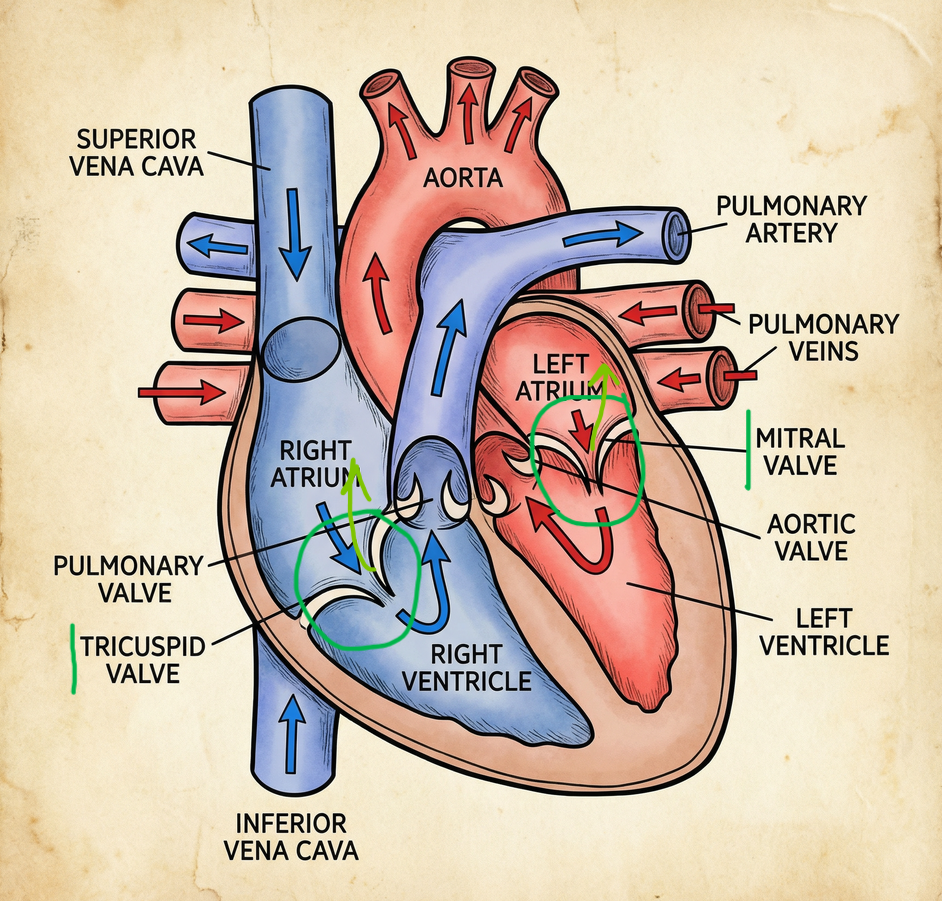
Stage B1 The mitral and tricuspid valves shown in green are the valves that get affected by MMVD. The leaks are also shown in green.
easy-peasy.ai/ai-image-generator
MMVD stage B1
A murmur is present, but the heart has not yet started to enlarge. No medication is needed at this stage, but we recommend regular monitoring to watch for any changes.
MMVD
book now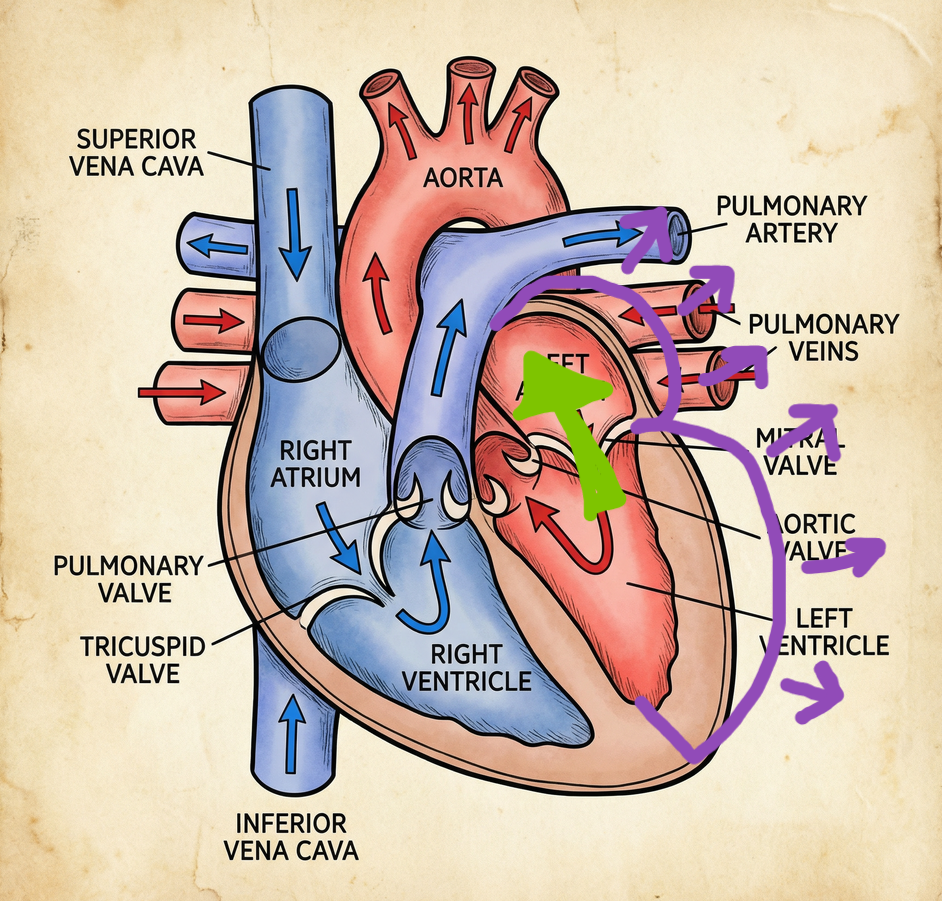
Stage B2 From the image above you will see the heart chambers enlarging and the valve leak jet increasing.
Stage B2
The leak increases and the heart begins to show signs of enlargement. At this stage, a medication called pimobendan has been proven to be highly effective at slowing the progression of the disease and extending a dog’s quality and quantity of life.
MMVD
book now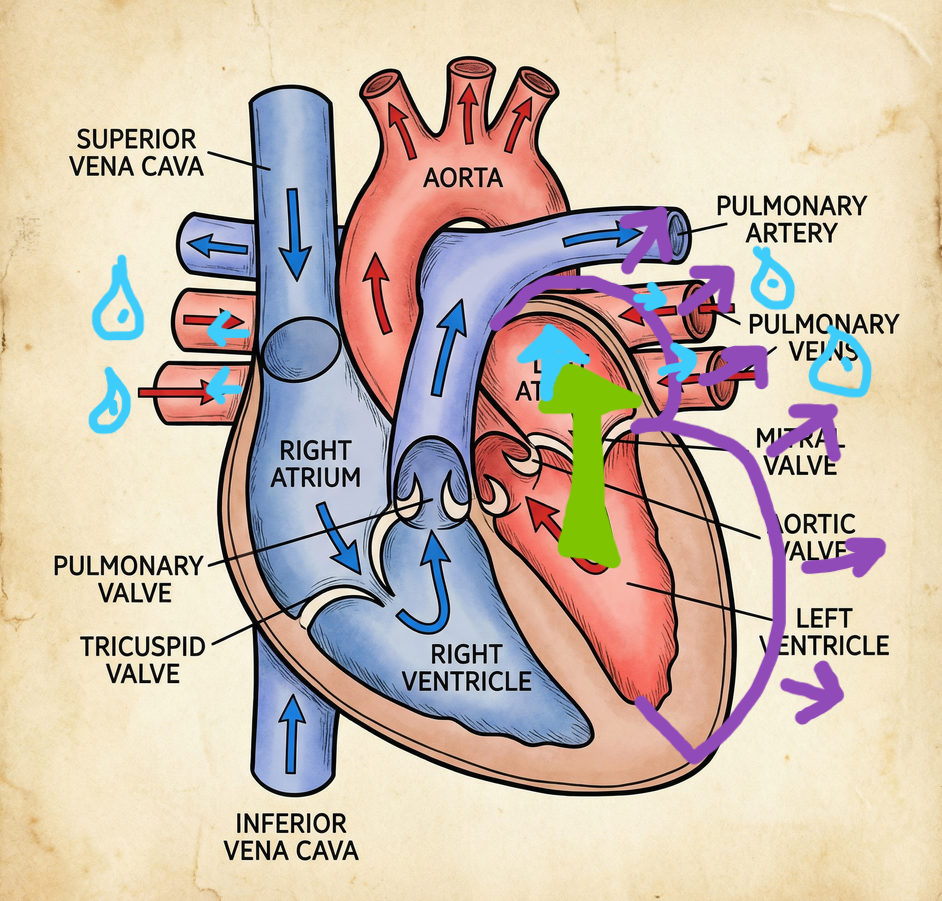
Stage C This image shows the increased pressure (in blue) in the left heart leading to increased pressure in the lung arteries and subsequent water leakage into the lungs.
Stage C
This stage is known as congestive heart failure, where fluid begins to build up in the lungs due to the ever increasing back-pressure from the leaking valve and the overfilled heart chamber. The earliest signs of this stage may initially only present as an increase in your dog’s sleeping breathing rate. This rate is usually easily counted even from a distance in a sleeping dog – the amount of chest excursions per minute in deep sleep. It has to stay under 30 per minute. Once it reaches 30 that may be an indication that the heart is going into decompensated heart failure.
This stage is still very treatable – but early detection is key. More heart medications will then be added to make sure the lungs are kept dry and the kidneys are not too dry – to achieve this we initially need to find the tailored dosage of drugs that works best for your pet. Rechecks at 2 to 3 monthly are key to see to it that he/she has their best and longest life.
book now
Diagnosis
Diagnosis of the different stages is done with listening to the heart and lungs, chest x-rays and echocardiography – great tools to ascertain that we give the best treatment for the right stage of heart disease.
If you are concerned that there has been a heart murmur heard in your dog, or if you want to get them checked as he or she is heading for middle ages you are welcome to make a booking at Village Vets where we keep your dog’s heart close to our own.
book now